

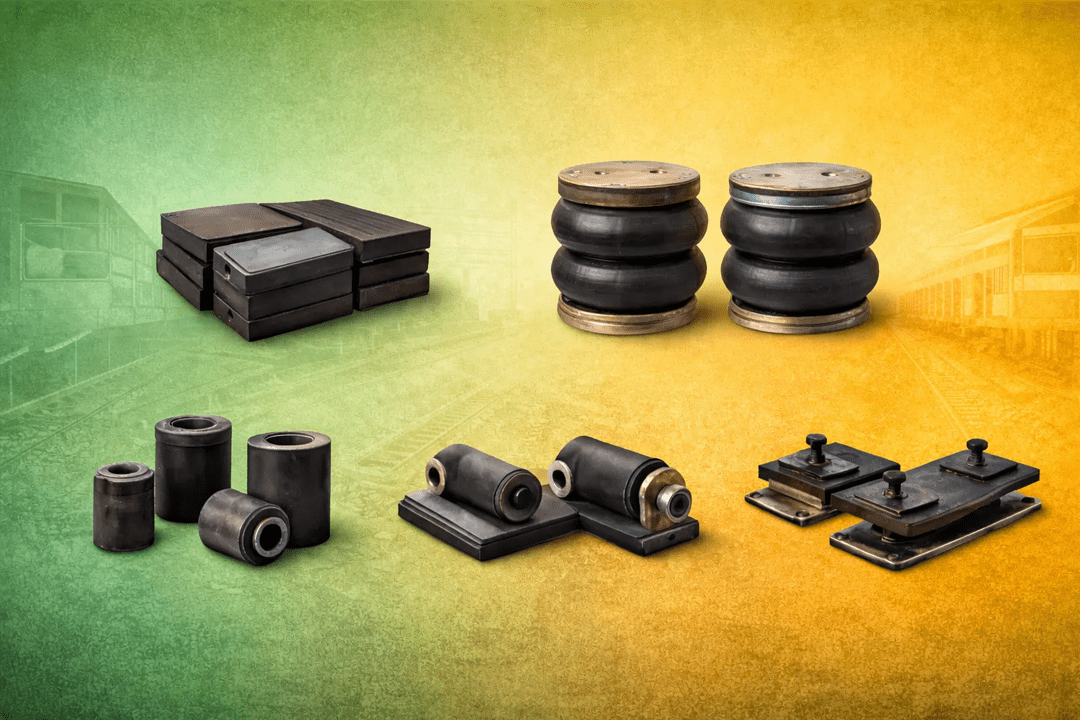
Rubber components play a critical role in ensuring the safety, stability, and longevity of railway track systems.Railway rubber components approved by RDSO are specifically designed and tested to withstand heavy axle loads, continuous vibration, and harsh environmental conditions encountered in Indian railway operations.
Approval from the Research Designs and Standards Organisation (RDSO) ensures that these components meet stringent safety, performance, and durability requirements, making them mandatory for use across Indian Railways infrastructure projects.
Understanding RDSO Approval in Railway Infrastructure
The Research Designs and Standards Organisation (RDSO) is the technical authority under the Ministry of Railways responsible for developing standards, specifications, and approval procedures for railway materials and systems in India.
Only those railway components that are approved by RDSO are permitted for use in track, rolling stock, and signaling systems. Approval confirms that manufacturers meet defined design, testing, and quality benchmarks. Procurement is typically restricted to RDSO-approved railway suppliers, ensuring uniformity, safety, and reliability across the rail network.
Role of Rubber Components in Railway Track Systems
Rubber components for railways serve multiple functional and safety-critical roles within the track structure. These components help:
- Distribute wheel loads evenly from rails to sleepers
- Absorb shocks generated by moving trains
- Reduce vibration transmission to sleepers and ballast
- Protect track components from premature wear
Across India, these functions of railway rubber components are essential for maintaining track geometry, improving ride quality, and minimizing infrastructure damage under high traffic density.
Railway Rubber Pads and Sleeper Pad Applications
Railway rubber pads, commonly installed between the rail foot and sleeper, act as elastic interfaces that cushion dynamic loads. They reduce contact stress and prevent direct metal-to-concrete interaction.
Sleeper pad applications involve placing rubber pads beneath concrete sleepers to improve load distribution over ballast, reduce ballast degradation, and extend track life. Both components are crucial for managing stresses and enhancing long-term track performance.
Railway Track Vibration Control and Noise Reduction
One of the key functions of rubber components is controlling railway track vibration. By absorbing energy generated during train movement, rubber pads reduce vibration transmission through the track structure.
Effective vibration control:
- Enhances passenger comfort
- Reduces noise pollution in urban areas
- Protects sleepers, fasteners, and ballast from fatigue damage
These benefits make rubber elements essential rail track safety components within modern rail infrastructure.
Rail Pad Manufacturers in India and Quality Expectations
When evaluating rail pad manufacturers in India, engineers and procurement teams focus on:
- Consistent material quality and formulation
- In-house testing and validation capability
- Compliance with RDSO specifications
- Traceable production and quality control systems
Only manufacturers listed as RDSO-approved railway suppliers are eligible to supply rubber components for Indian Railways projects, ensuring performance reliability and regulatory compliance.
RDSO Testing and Approval Requirements for Rubber Components
To obtain approval, RDSO-approved railway rubber components must undergo rigorous testing that evaluates:
- Static and dynamic load performance
- Fatigue resistance under repeated loading
- Environmental resistance to heat, moisture, oil, and ozone
- Long-term durability and dimensional stability
This testing framework ensures that rubber components qualify as dependable rail infrastructure safety products, capable of performing under continuous operational stress.
Safety Benefits of Using RDSO-Approved Rubber Components
Using RDSO-approved components delivers measurable safety and operational benefits, including:
- Improved track stability and alignment
- Reduced maintenance frequency and costs
- Lower risk of component failure
- Enhanced safety margins for high-speed and heavy-haul operations
As critical components for rail track safety, approved rubber elements contribute directly to safer, more reliable railway networks.
Choosing Reliable RDSO-Approved Railway Rubber Component Suppliers
When selecting suppliers, stakeholders should assess:
- Valid RDSO approval status
- Proven experience with railway projects
- Availability of testing facilities and certifications
- History of compliance and audit performance
Working with established RDSO-approved railway suppliers ensures consistent quality, timely approvals, and adherence to Indian Railways specifications for railway rubber components in India.
Importance of RDSO-Approved Rubber Components in Track Safety
In conclusion, RDSO-approved railway rubber components are fundamental to safe and efficient railway operations in India. Their role in load distribution, vibration control, and component protection makes them indispensable within modern track systems.
Strict adherence to RDSO standards, comprehensive testing, and careful supplier selection ensure long-term performance, reduced maintenance, and enhanced safety across the railway network.
AUTHOR: Mr. Lakshminarayan
ROLE: Head QC

About The Author
Mr. Lakshminarayan has been with Ameenji for over 13 years. A rubber technologist, Mr. Lakshminarayan looks after all quality controls of the plant and looks after testing protocols and plans followed for inspection of railway and infrastructure components.