

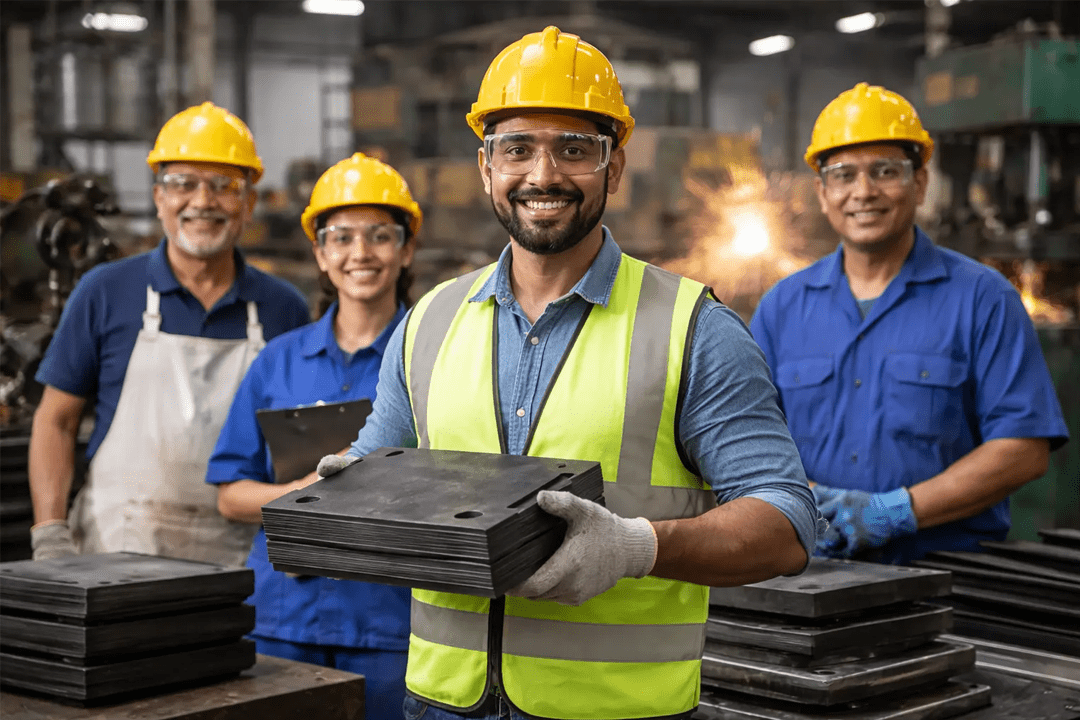
Export readiness in rubber manufacturing goes far beyond production volume or cost competitiveness. Export-ready rubber manufacturing operations are defined by their ability to consistently meet international quality expectations, testing requirements, and regulatory standards across global markets.
For manufacturers supplying rubber engineering products internationally, structured quality systems, validated testing processes, and compliance discipline form the foundation of sustainable export success.
What Makes a Rubber Manufacturing Operation Export-Ready
An export-ready operation is built on predictability and control. International buyers expect consistency across batches, transparency in documentation, and adherence to defined specifications.
Key elements include:
- Robust rubber manufacturing quality systems
- Repeatable production processes
- Verifiable testing and inspection
- Accurate documentation and audit readiness
These elements ensure the delivery of export-quality rubber products that meet both technical and regulatory expectations.
Quality Management Systems in Rubber Manufacturing
Structured rubber quality management systems are central to export-oriented manufacturing. They establish defined workflows, responsibilities, and controls across procurement, mixing, molding, finishing, and dispatch.
Effective systems emphasize:
- Standard operating procedures
- Manufacturing process control of rubber at each stage
- Corrective and preventive action mechanisms
- Continuous monitoring and improvement
Such systems reduce variability and support consistent performance across export consignments.
Importance of Testing in Export-Oriented Rubber Manufacturing
Testing is critical to validating material performance and ensuring reliability in end-use conditions. Export markets demand proof that products meet specified performance requirements, not just design intent.
Key aspects include:
- Mechanical and physical testing
- Material consistency verification
- Functional performance checks
Compliance with rubber product testing standards supports a structured rubber product validation process, reducing the risk of rejection or field failure.
Role of In-House Testing Laboratories and Accreditation
An in-house rubber testing laboratory allows manufacturers to monitor quality in real time and validate products before dispatch. This capability supports faster decision-making and tighter process control.
In-house testing also strengthens traceability in rubber manufacturing, as test data can be directly linked to production batches, raw materials, and process parameters. Accredited environments further enhance confidence in test reliability and repeatability.
International Rubber Manufacturing Compliance Requirements
Global markets impose varied but rigorous expectations on rubber products. International rubber manufacturing compliance typically includes:
- Material safety and conformity
- Performance alignment with customer or regional standards
- Documentation accuracy and consistency
- Readiness for customer and third-party audits
Meeting international rubber standards for exports is essential for maintaining uninterrupted market access.
Documentation and Traceability for Export Markets
Documentation is a critical pillar of export readiness. Buyers and regulators expect transparent records covering production, testing, and inspection.
Strong traceability in rubber manufacturing enables:
- Batch-level tracking
- Root cause analysis
- Faster issue resolution
Accurate records also support export compliance for rubber manufacturers, especially during audits and customer evaluations.
Preparing Rubber Products for Global Market Expectations
Supplying rubber manufacturing for global markets requires alignment beyond production. Manufacturers must consider:
- Dimensional and performance consistency
- Packaging suited for long-distance transit
- Correct labeling and identification
- Coordination with logistics and documentation teams
Understanding how to prepare rubber products for export helps ensure smooth delivery and acceptance in international supply chains.
Common Export Readiness Gaps in Rubber Manufacturing
Typical gaps that affect export performance include:
- Inconsistent testing practices
- Incomplete or outdated documentation
- Weak process control
- Limited awareness of required rubber manufacturing certifications
Addressing these gaps strengthens export compliance for rubber manufacturers and reduces delays, rejections, or rework.
Building Long-Term Trust With International Buyers
Trust in global trade is built through reliability, transparency, and compliance. Export-ready operations demonstrate:
- Consistent delivery of export-quality rubber products
- Clear communication and documentation
- Alignment with international rubber manufacturing compliance expectations
These factors foster long-term partnerships rather than transactional relationships.
Strengthening Rubber Manufacturing Operations for Global Trade
Quality systems, validated testing, and regulatory compliance are the cornerstones of successful exports. Manufacturers that invest in structured processes and global alignment position themselves for sustainable international growth.
By strengthening these foundations, organizations can build truly export-ready rubber manufacturing operations, capable of meeting evolving global standards and long-term market expectations.
AUTHOR: Mr. Mustafa Saifuddin Lokhandwala
ROLE: COO / General Manager – Export

About The Author
A lawyer by profession, Mr. Mustafa is the chief operating officer who looks after operations of the company along with exports for Ameenji.